
City living is a lot different than country life. This is just as true for wild animals as it is for people. The urban environment can be harsh for wild animals. But there are perks to living in proximity to humans, too. This article will explore why some wild animals choose to adapt to urban environments.
Wildlife Behavior in Urban Environments
Wild animals that adapt to urban living can act very differently compared to others of their species that live in the woods. Urban wildlife tends to be less afraid of humans. Some researchers note that the animals may even be bolder and more likely to approach humans. Animals in cities tend to be able to solve problems and navigate their surroundings better than their forest-dwelling counterparts.
Predator-less Environments
A lack of predators in urban environments helps smaller critters thrive. Rodents and pigeons especially benefit here. While occasional interactions with cats or dogs can happen, there aren’t enough of these encounters to truly count as predators. Without a top of the food chain to cull populations, flocks and colonies can grow rampant.
Food Availability and Competition in Cities
In the woods, food may be scarce at times, and must be guarded. In urban areas, trash bins and food scraps are plentiful. As a result, animals are often less territorial over food sources. In some cases, different species may even coordinate their efforts to gain access to dumpsters or garbage cans. Not to mention, some humans will actively feed wild animals.
Competition can still occur, but it is generally over nesting territory or mates. With animals not having to worry about food access, they are more able to explore further and find a place to live with less territorial conflict.
Raccoons and Urban Adaptation
Raccoons can eat almost anything that humans eat, and then some. They are expert climbers, navigators, and scavengers. Their dexterous paws help them open containers and access interior spaces. They are probably the animal that is most suited to urban adaptation.
Squirrels in the City
Much like raccoons, squirrels are extremely well adapted to urban environments. Their small size, expert climbing, and incredible agility help them move swiftly through the streets. Research shows that squirrels show signs of methodical memorization when it comes to investigating new spaces. This means that squirrels learn from methods that work and adapt to new situations by testing proven methods. This helps them access food or shelter by utilizing learned behaviors.
Rats and Mice – Urban Colonies
Rodents like rats and mice can utilize the density of urban life to their advantage. They can hide in the walls, sewers, and subways of the city. Rats and mice alike use pipe systems, cable corridors, and more to move in secret throughout their territory. This leads to larger colonies, more splintering groups, and larger populations overall. There are millions of rats in New York City.
Pigeons
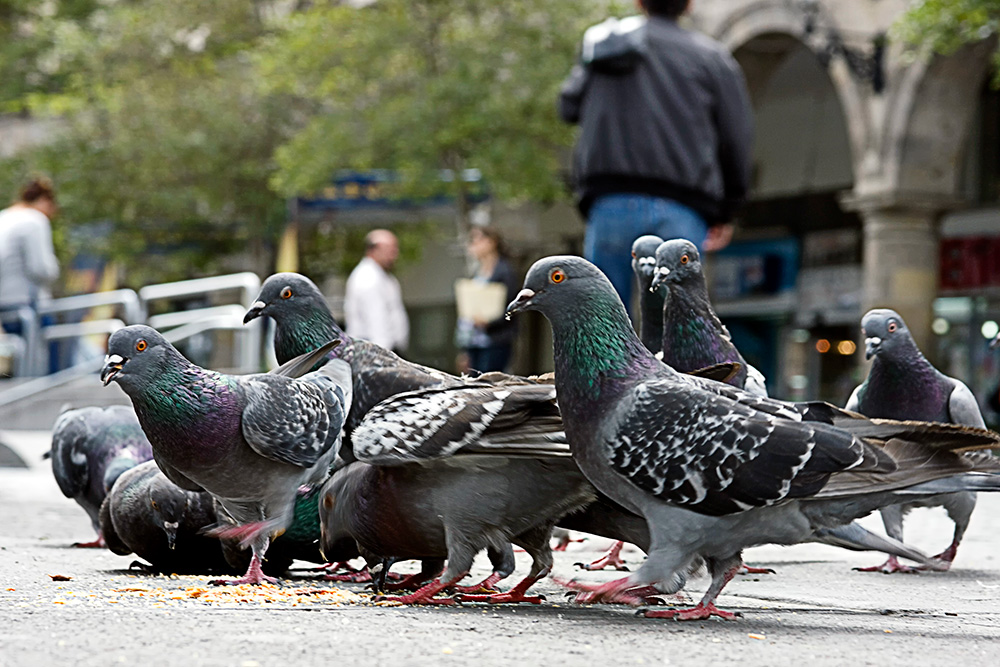
No bird is more well-adapted for American urbanization than the pigeon. Pigeons naturally roost on cliffs or ledges, making them easily able to adapt to living on buildings. Their opportunistic diet also gives them a lot to work with in a city. Pigeons also breed year-round, unlike many birds that breed seasonally. They feed their young through secretions of their crop, which is part of their esophagus. This makes feeding offspring more efficient. Additionally, pigeons have short, fast-moving wings. This lets them take off with limited space needed. Their wingspan also helps them navigate more easily around large buildings.
Urban Wildlife Removal
While wildlife in your neighborhood can be fun to observe, they are a lot less fun in your home. New York/New Jersey Wildlife Removal Inc specializes in the humane removal and exclusion of wild animals. Our specialists help rid your home of unwanted critters and reinforce entry points to reduce the risk of animal invaders in the future.