
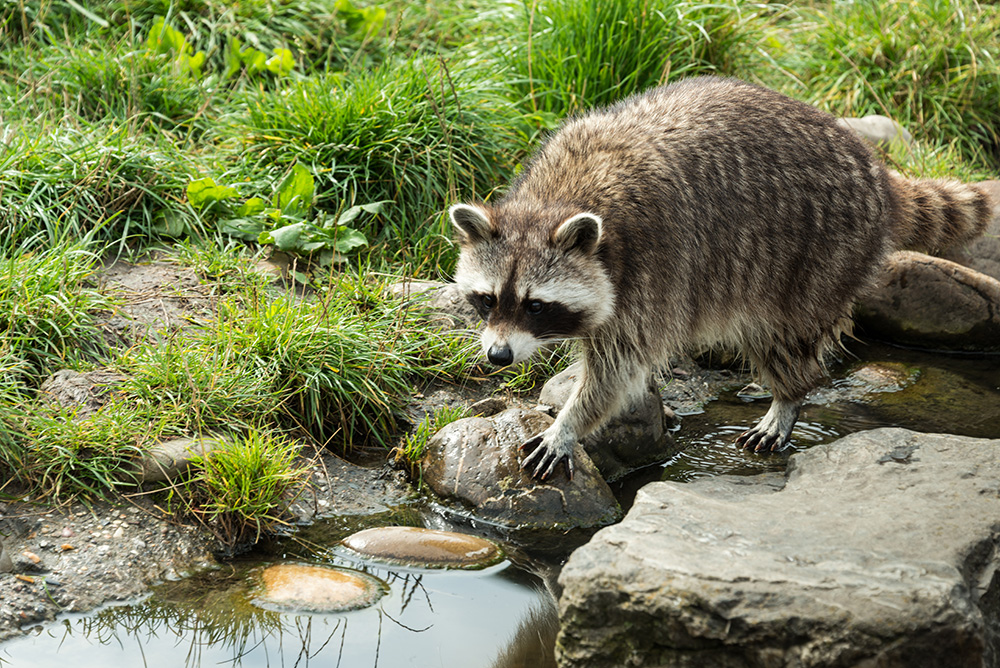
Raccoons are known for their dumpster-diving antics. But they eat much more than just trash. Below, we will discuss what raccoons like to eat and how to defend your home against these critters.
Raccoons are Omnivorous
Raccoons can eat both plant and animal materials, and a wide variety of both. While we often think of them as scavengers, they can hunt and forage for food in the wild. From grubs and insects to fish, raccoons can eat a wide assortment of critters. They will also eat carrion if available. However, they will gravitate to easily accessible food nearby. This is why it is often easier for them to scavenge in urban environments. Garbage cans and dumpsters can be easy pickings for a raccoon. Plates of food left out after your summer barbecue are free game. Koi ponds can also provide easy hunting grounds for them. Additionally, they love to snack on vegetables from your garden.
Raccoons and Corn
Raccoons will eat a wide assortment of vegetation and are a known nuisance for gardeners. But one thing they love more than most is corn. Sweet corn is often a favorite. Whether it’s in your garden or your trash can, these critters have been known to dig through trash to get to these vegetables.
One way gardeners can reduce raccoon corn theft is by interplanting or growing taller corn varieties. Pumpkins and pole beans are good for interplanting, as they tend to dislike the vines and foliage.
Raccoon Food-Washing
One quirky thing about raccoons is that they love to wet their food. When near a water source, they tend to dunk their food, rolling it around in their paws. The scientific name for a raccoon is Procyon lotor, and lotor means “washing.” The accepted theory as to why they do this lies in their paws.
Raccoons have a large number of sensory nerves in their paws, much more than most other mammals. When their paws become wet, the receptors become more sensitive. Scientists believe that the little bandits wet the food to gather more information about it. This may help them identify what they are eating or check for safety. Because of this practice, they have historically contributed to seed-spreading. They may have played a role in distributing some plants across parts of North America through creeks, rivers, and other waterways.
Raccoon-Proofing Your Trash Cans
To prevent raccoons from accessing your garbage, you should invest in sturdy, animal-proof garbage cans with locking lids. Raccoons are adept at opening weaker garbage bins or knocking over less sturdy ones. In some cases, they can use their claws to slash through weaker materials, such as soft plastics.
Do Not Feed Wild Raccoons
Never feed or leave food out for raccoons or other wild animals. Do not leave out food for pets overnight or unattended. Raccoons have a good memory for food. They may remember where they got it and return for more. If your trash cans are not secure, they will likely know to return for more food later. Because of this, you may have a recurring problem with critters in your trash.