
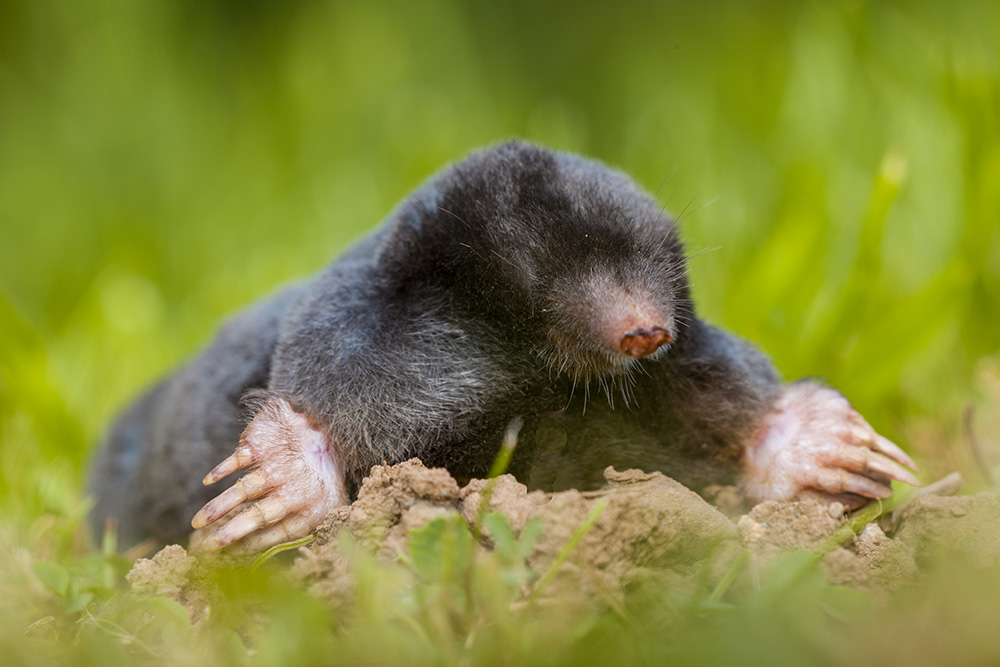
Moles are insatiable diggers that can wreak havoc on your lawn or garden. Their tunnels can damage your lawn and compromise soil stability. If your lawn is overrun with moles, people could even be injured due to unstable soil conditions. This article will cover why these critters can be a major problem for homeowners.
How Moles Affect Your Lawn
Moles tend to dig long, winding tunnels that contain different pockets for them to live in. They are expert diggers and can swiftly reposition the soil around them as they burrow. A telltale sign of mole activity is their burrow holes. They tend to leave holes with a horseshoe-shaped mound of dirt around them. However, these holes aren’t the only area where your lawn is affected. The long, winding tunnels and den pockets can weaken the soil above. When someone walks above them, the soil may fall inward. This can lead to injury.
Digging Tunnels
Moles can tunnel through about 6 meters of dirt per hour. The average tunnel complex can support up to about 12 moles living inside them. Their tunnels will generally sit about 1 foot below the surface. They can survive in low-oxygen environments with ease, allowing them to thrive underground, even if their tunnels collapse.
Moles in the Garden
Moles can be a particular nuisance for gardeners. These omnivorous critters can eat beneficial earthworms and your plants alike. They particularly like to eat newly sprouted seeds. If they burrow under your garden, they can affect the root structures and make it harder for your plants to thrive.
Humane Removal for Wild Moles
Wild moles can cause major problems for homeowners. If you have a critter problem, call New York/New Jersey Wildlife Removal. Our team specializes in the humane removal and exclusion of a variety of wild animals like moles, raccoons, squirrels, and more.