
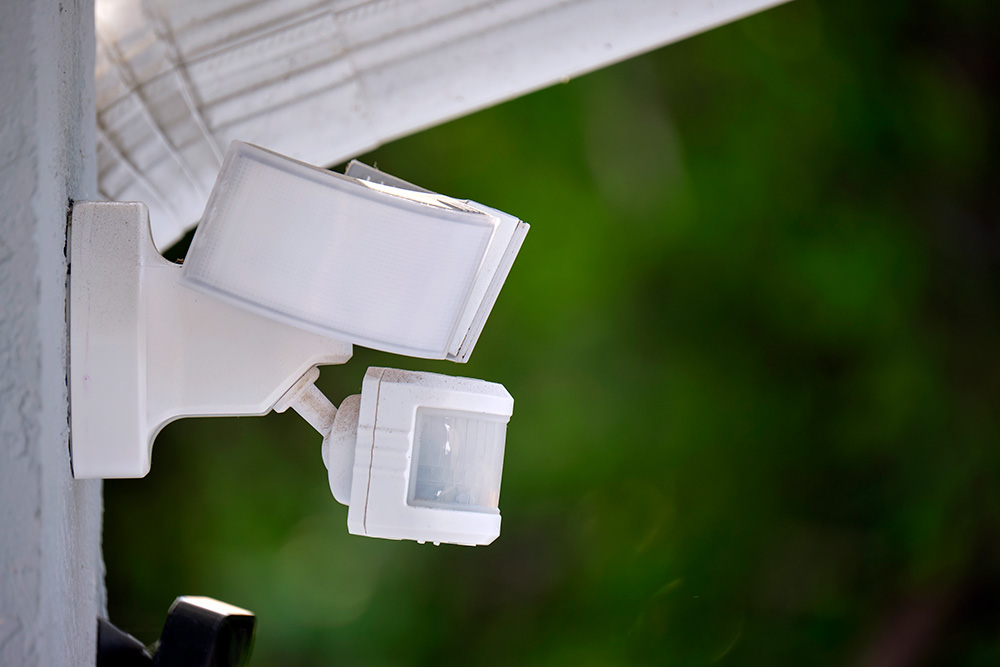
There are several DIY tricks to help keep critters away from your home, but they don’t always work. There isn’t always a simple way to keep raccoons and skunks out of your trash cans. One of the most popular upgrades to your home exterior for deterring wild animals is installing motion sensor lights. But how effective are they for keeping animals away? In this article, we will discuss the effectiveness of motion sensor lights for keeping wildlife away.
Why Do Homeowners Use Motion Sensor Lights?
For nocturnal animals like raccoons, opossums, and skunks, bright lights can seem like the perfect deterrent. They like to hide in the dark, and their eyes work better in darker areas. So sudden bright light should make them run away, right? Motion sensor floodlights allow you to brighten up your alleyway or backyard. When motion is detected, the lights come on. Because of this, motion sensors seem to be a practical and low-energy solution to lighting up your alleyway, for personal use, and as a critter-defense tool. Bright motion lights can also be a potential defensive measure for burglars and home break-ins, in theory.
Why Run-of-the-Mill Flood Lights Don’t Work
Animals tend to adjust to their environments. Flood lights that are always on waste energy and allow critters to adapt to the light levels. If your trash cans are always well-lit because you leave a light on, they will likely get used to the appearance of light in the space.
Why Motion Sensor Lights are Considered More Effective than Flood Lights
The sudden brightness of motion sensor lights can scare off or disorient a nocturnal animal. This could cause them not to return. On the other hand, motion sensors that continue to stay on as motion occurs can be practical for your personal use, but aren’t as effective of a deterrent.
Light Positioning and Animal Deterrence
Consider how your lighting should be laid out. Generally, you will want to properly illuminate your alley or backyard. Survey the area at night. Look for good hiding spots, and ensure that the light hits those areas. Consider where smaller animals may look to hide in the shadows. Installing lights at different angles and from different positions can help reduce hiding spots and ensure more effective coverage.
Additionally, consider the angles of the lights. Try to aim them so that they don’t shine into windows. You won’t want to be startled awake by bright lights in your window. And neither do your neighbors. For your home, and the homes around you. No one wants a floodlight shining into their home late at night. Lastly, positioning the lights closer to or above the trash cans can provide more illumination in the target area.
Motion Sensor Lights are Not a Catch-All
With all this in mind, should you even bother with Motion Sensor lights? Well, the answer isn’t so clear-cut. Animals can be resourceful, especially when hungry. So while your motion sensor lights may help at first, they may not be a perfect or permanent solution. Additionally, they may only stop some wild animals. The raccoons in your neighborhood may be more comfortable with light than the opossums, for example. You might also need to adjust angles and settings on the lights through some stages of trial and error. Additionally, making some slight changes over the lifespan of your lighting can help prevent critters from getting used to the pattern entirely.
In the case of home protection from burglars, motion sensor lights are often sold as a helpful addition to a home security system. After all, the lights can help prevent the thief from hiding in the dark, right? Statistically, most B&E’s occur between 10 AM and 3 PM, when people are the least likely to be home. And coincidentally, when your floodlights are likely the least effective.
Defending Your Trash Cans and Your Home from Wild Animals
The best way to secure your trash cans is by attacking the problem from many angles. Invest in strong, animal-proof trash cans with locking lids. Use ropes or bungee cords to secure the cans to your fence or home. Increasing the difficulty of accessing food scraps can deter even the most desperate critters. There is no one-stop solution to wild animals on your property. A multi-pronged approach helps reduce your likelihood of dealing with critters.
And, if your animal problem extends beyond critters in your trash cans, you may need to call in some backup. New York/New Jersey Wildlife Removal, Inc. offers humane wildlife removal and exclusion services. Our team works to expel animals from your property and keep them out of your home. We also offer 24/7 emergency service.