
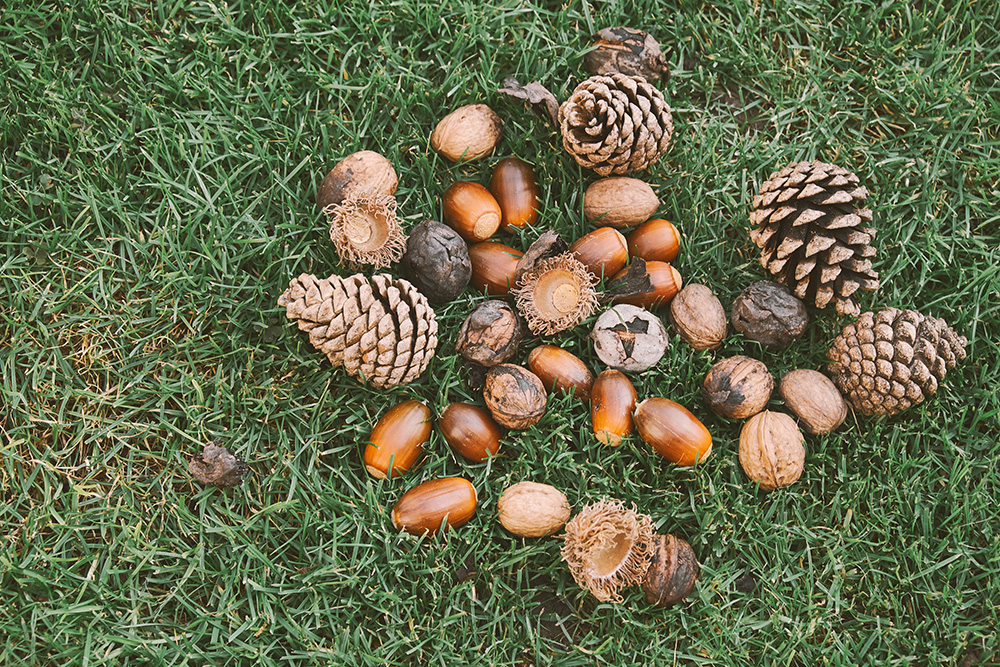
Most people know that squirrels will store nuts and seeds for the winter, but how does it work? This article will dive into the mechanics of squirrel caches and how they meticulously plan for their winter food storage.
Squirrel Food Storage
In the fall, a single squirrel can hide up to 3,000 nuts or seeds for the winter. They can hide this food all throughout their territory, in a variety of places. They may bring food to their drey (nest), bury it in a pile, or stash a few items in a crevice. All in all, squirrels plan meticulously to hide as much food as possible in caches spread across their territory. This methodology helps them to stay fed through cold and snowy winters, even if rival squirrels or other animals find some of their stashes.
Larder and Scatter Hoarding
There are two main ways a squirrel will store food: larder hoarding and scatter hoarding. Larder hoarding is where a squirrel caches a vast pile of food in an area. Scatter hoarding is where the squirrel will create a number of small pockets to hide a few nuts each. Many squirrels will have a combination of scattered food and stashed larders to keep them fed throughout the cold months.
As the squirrel forages, it will make decisions based on several factors, whether to bring food to a larder spot, or to stash the food in a scattering method. These factors can include availability and type of food, predator avoidance, and whether other squirrels are watching them. They will not want to give up their larder locations to other squirrels if possible. The likelihood of scattering can also depend on the environment they live in. Suburban squirrels, for example, are much more likely to scatter hoard than woodland squirrels.
Squirrel Memories and Their Caches
Research shows that squirrels have excellent memory when it comes to retrieving their stored food. They can plan out trajectories to navigate back to specific hoards when needed. Squirrels can also remember where rival squirrels hid food away. This allows them to compete for additional stashes when needed or more convenient. Some studies even suggest that they can remember stash spots and methods to access food almost 2 years later.
Unpilfered Caches
Of course, not every stash will be eaten or recovered. While older studies suggest that squirrels may have forgotten about some of their many stashes, newer research suggests that they hide much more than is necessary, and simply don’t need to return to every stash. These unpilfered hiding spots can provide food in dire situations in the early spring, or even lead to the growth of new plants. Squirrel stashes can play a vital role in new tree growth and the proliferation of other plants. Over time, an area’s squirrel population can play a major role in the growth of forests and the spreading of certain tree species.
Humane Squirrel Removal
If you have a squirrel living in your home, shed, or other area of your property, call New York/New Jersey Wildlife Removal Inc. We provide fast, effective, and humane removal of wild animals of all shapes and sizes. Our team also offer 24/7 emergency removal services.